Bathroom Renovation Mistakes Vancouver Homeowners Should Avoid
A Burnaby homeowner spent $38,000 renovating her primary bathroom. Gorgeous freestanding tub, rainfall shower, marble-look porcelain tile. Three months later, she called: “The mirror fogs instantly. Mold is growing on the ceiling. I have nowhere to put towels. The shower door hits the toilet when open. Can we fix this?” We couldn’t—not without ripping out $18,000 worth of work. Exhaust fan undersized (50 CFM instead of minimum 110 CFM). No recessed storage. Shower door swung wrong direction, required complete glass replacement ($2,800). Fixing the mistakes cost $14,200—37% of the original renovation.
After managing 180+ Vancouver bathroom renovations, here are the expensive mistakes homeowners make—and how to avoid them before tile goes up.
Mistake #1: Inadequate Ventilation (The Mold Generator)
Vancouver gets 289 days of precipitation. Our bathrooms generate moisture constantly—showers, baths, sinks, humidity tracked in from outdoors. Without proper ventilation, that moisture saturates drywall, grout, wood, paint. Result: mold growth in 8-14 months, paint peeling, ceiling damage, grout deterioration.
What goes wrong: Homeowners install builder-grade 50-80 CFM fans to “save money” ($120 vs $280 for quality 110 CFM). Or they skip fan upgrades entirely, keeping the 30-year-old 40 CFM fan that barely moves air.
A Kitsilano bathroom (80 sq ft) used a 50 CFM fan. After 11 months: black mold on ceiling near shower, grout turning gray-black (mold), paint bubbling on walls. Professional mold remediation: $4,200. New exhaust system with proper ducting: $1,800. Total cost to fix what should’ve been done right: $6,000.
BC Building Code requires: Minimum 50 CFM for bathrooms under 100 sq ft. But that’s minimum for code—not adequate for Vancouver moisture. Real-world requirement: 110 CFM for bathrooms 75-100 sq ft, 150 CFM for 100-150 sq ft.
Ducting matters: Fan must vent to exterior (roof or exterior wall), not into attic. Ductwork must be rigid metal or insulated flex duct. A North Vancouver bathroom had 110 CFM fan venting into attic—completely useless. Moisture accumulated in attic, rotted roof sheathing. Repair: $8,400.
The fix: Budget $450-$850 for quality exhaust fan (Panasonic WhisperCeiling 110-150 CFM) + installation + proper ductwork to exterior. Panasonic fans run <0.3 sones (whisper-quiet), move proper CFM, last 15+ years. Cheap fans ($120 installed) fail in 3-5 years, never move rated CFM.
Mistake #2: Single-Source Lighting (The Cave Effect)
Homeowners install one ceiling light (recessed or flush-mount) and call it done. Then they live in the bathroom and realize: shadows over the mirror (you’re blocking overhead light), can’t see clearly for makeup/shaving, dark corners feel dingy, nighttime bathroom trips are blinding (bright ceiling light or pitch darkness, no middle ground).
What goes wrong: Task lighting (vanity) gets skipped to save $450-$650. Result: daily frustration using the space.
A Mount Pleasant bathroom had single ceiling recessed light. Homeowner standing at vanity blocked the light, creating shadow over her face. Applying makeup required leaning sideways. Added vanity sconces afterward: $780 (electrician opened walls, ran wire, patched/painted). Should’ve been $280 during renovation.
The fix: Layer three lighting types
Ambient (general): Ceiling recessed lights or flush-mount (LED, dimmable). Controls general brightness.
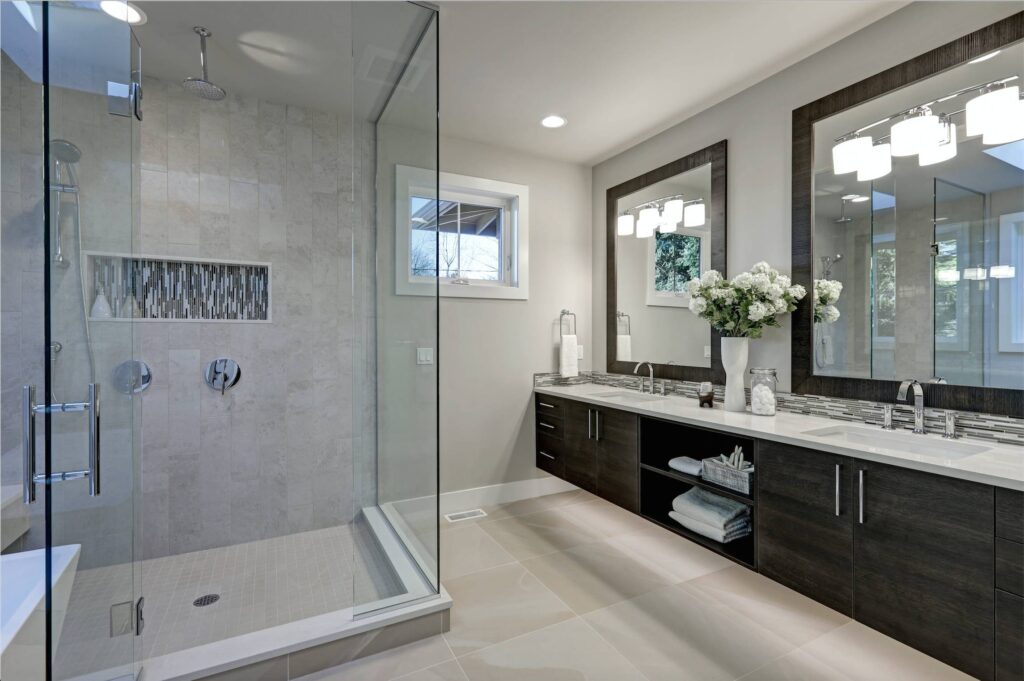
Task (vanity/mirror): Wall sconces at mirror height (60-65 inches to center), both sides of mirror. Or backlit mirror. Or LED strip above mirror. This eliminates shadows on face. Budget $280-$480 for sconces + installation during renovation.
Accent (mood): Shower niche lighting, toe-kick LEDs (nighttime navigation without bright overhead), tub deck lighting. Optional but dramatically improves usability.
Minimum investment for proper bathroom lighting: $850-$1,400 (ambient + task + controls). Returns daily quality-of-life value, helps resale.
Mistake #3: Ignoring Storage (The Cluttered Counter Syndrome)
Homeowners design beautiful minimalist bathrooms with floating vanities, wall-mount faucets, frameless glass—then realize they have nowhere to put: towels, toilet paper, hair dryer, straightener, skincare products, medications, cleaning supplies, backup toiletries.
What goes wrong: Counters become cluttered with bottles/products. No storage = chaos.
A Fairview bathroom had 24-inch floating vanity (looks sleek), no medicine cabinet, no recessed niches, no linen closet. Three months later: counters covered with products, towels stacked on toilet tank, toilet paper rolls visible on floor. “It looks awful. I hate my $32,000 bathroom.”
The fix: Plan storage for everything you actually own
Recessed niches: Shower niches (minimum 12″x16″, deeper is better—4-5 inches). Install during framing ($180-$320 each including tile). Retrofitting after tile costs $1,200-$1,800.
Medicine cabinets: Recessed units (16-24 inches wide) provide storage without taking floor/counter space. Mount at eye level. Budget $320-$680 for quality recessed medicine cabinet.
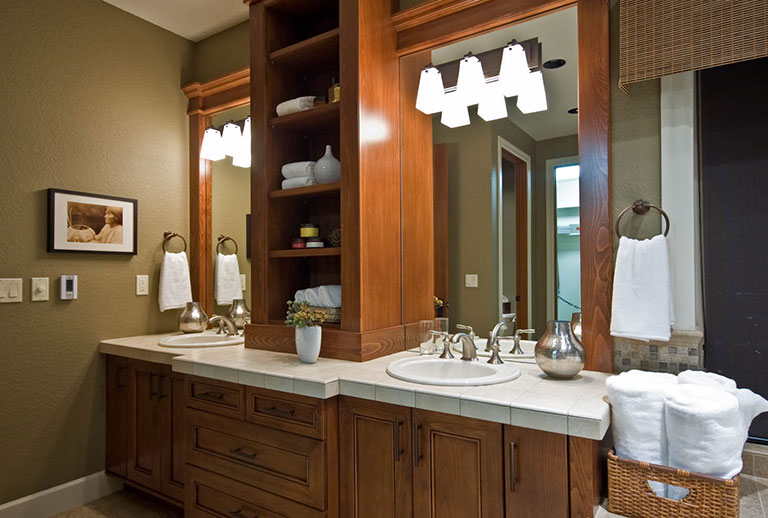
Vanity drawers: Deep drawers > cabinet doors. Drawers provide 70% better access. A 36-inch vanity should have 2-3 deep drawers, not cabinet with single shelf.
Linen storage: If no linen closet nearby, plan tall cabinet (12-18 inches wide, floor to ceiling). Stores towels, toilet paper, cleaning supplies. Budget $580-$920 installed.
Mistake #4: Shower Door Swings and Clearances (The Collision Problem)
Bathrooms are tight. Door swings matter. Homeowners focus on aesthetics, ignore physics—shower doors that hit toilets, entry doors that hit vanities, insufficient clearance for comfortable movement.
What goes wrong: Shower door swings outward, hits toilet. Standing at vanity blocks entry door. Can’t open vanity drawers when someone’s at toilet.
A Kerrisdale bathroom had frameless shower door ($1,800) that swung outward and hit toilet when fully open. Homeowner lived with it 8 months before calling us. Only fix: Replace shower door with sliding door ($2,200) or relocate toilet ($4,800—replumb, retile floor). She chose to live with it.
The fix: Verify clearances on paper first
Shower door: If space is tight, slider or pivot doors > swing doors. Swing doors need minimum 24 inches clearance when open.
Toilet clearance: Minimum 15 inches from toilet center to any wall/obstruction. Comfortable is 18+ inches.
Vanity clearance: Minimum 30 inches from vanity front to opposite wall/toilet. Comfortable is 36+ inches.
Entry door: Should open without hitting toilet, vanity, or shower. If space tight, consider pocket door or barn door.
Tape out bathroom layout on floor full-scale before finalizing. Walk through simulated movements (opening shower door, using toilet while door open, accessing vanity, entry/exit). Fixes on paper cost $0. Fixes after tile cost thousands.
Mistake #5: Cheap Waterproofing (The Time Bomb)
Waterproofing is hidden behind tile. Homeowners don’t see it, so they skip proper systems to save $400-$600. Then 18-36 months later: water leaks into walls/floor, subfloor rot, tile failure, mold behind tile.
What goes wrong: Contractors use 6-mil poly sheeting instead of proper membranes (Schluter Kerdi, RedGard). Water penetrates over time. Tile looks fine—damage is hidden behind/below until catastrophic failure.
A Richmond bathroom used poly sheeting behind shower tile. After 22 months, tile near drain cracked. Investigation: subfloor rotted completely through, floor joists damaged. Repair: $18,200 (demo tile, replace subfloor/joists, redo shower properly). Should’ve spent $680 on Schluter Kerdi system during renovation.
The fix: Budget $680-$1,200 for proper waterproofing membrane (Schluter Kerdi or equivalent). This includes membrane, curb, corners, mixing valve seals. Non-negotiable in Vancouver’s wet climate. Contractors who suggest poly sheeting or paint-on waterproofing are cutting corners that will fail.
Mistake #6: Trendy Finishes That Date Quickly
Matte black everything. Bold patterned tile. Colored grout. Vessel sinks. These look stunning in 2026. In 2031, they’ll look dated. Bathroom renovations cost $25,000-$45,000 in Vancouver. You cannot renovate every 5 years chasing trends.
What goes wrong: Permanent fixtures (tile, vanity, shower fixtures) in trendy finishes make bathrooms feel dated quickly.
A Dunbar bathroom 2020: matte black fixtures, bold geometric tile, navy vanity. Listed 2024—buyers said “would need updating,” “too specific.” Comparable bathrooms with neutral finishes sold $18,000-$24,000 higher.
The fix: Timeless in tile (white/gray/beige subway, simple patterns). Timeless in fixtures (chrome, brushed nickel). Timeless in vanity (white, gray, natural wood). Trend in accessories (towels, art, hardware)—easy/cheap to swap later.
Mistake #7: Undersized Vanity (The Regret Factor)
Homeowners choose 24-30 inch vanities to save space/money. Then realize: no counter space for products, no storage, feels cramped, resale suffers (buyers want 36+ inches primary bath, 30+ inches guest bath).
The fix: Primary bathroom minimum 36 inches vanity (48-60 inches better). Guest bathroom minimum 30 inches. Double sinks need 60-72 inches. If space truly can’t fit proper vanity, reconsider layout—maybe pedestal sink + separate storage cabinet works better than undersized vanity.
Mistake #8: Wrong Tile Choices for Vancouver
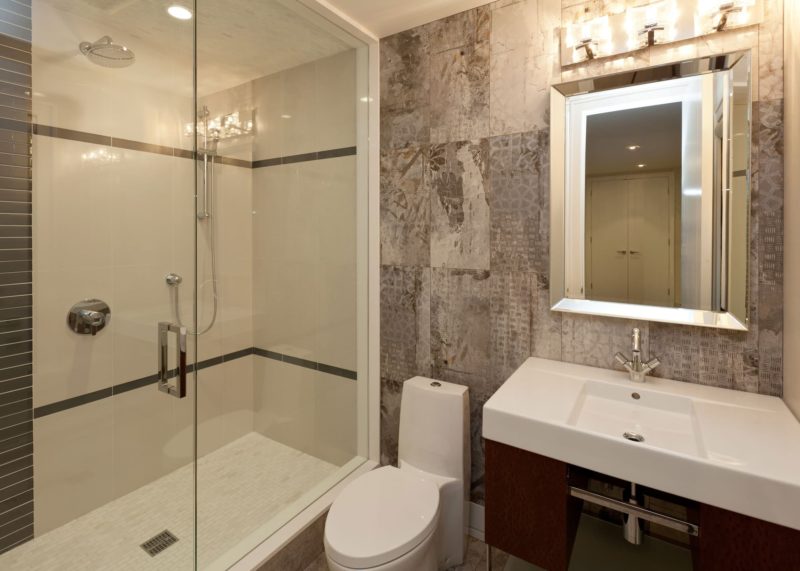
Porous stone (marble, travertine, limestone) requires sealing, maintenance, shows water spots, etches from cleaners. Textured tile floors accumulate dirt in grooves, impossible to clean thoroughly. Large-format floor tile (24×24 or bigger) in small bathrooms requires more cuts, waste, looks off-proportion.
The fix: Porcelain tile (non-porous, zero maintenance). Simple patterns. Floor tile 12×24 or smaller for bathrooms under 80 sq ft. Walls can go larger. Avoid natural stone unless you want high maintenance.
FAQs
Q: Should I combine tub and shower or separate?
A: For primary bathrooms with space, separate tub + shower adds value (72% of buyers want soaking tubs). For small bathrooms or guest baths, skip tub—walk-in showers preferred. Tub/shower combo feels dated, reduces resale appeal.
Q: How much should I budget for Vancouver bathroom renovation?
A: Guest bath refresh (new fixtures, paint, tile): $8,500-$14,000. Full guest bath gut/rebuild: $18,000-$28,000. Primary bath gut/rebuild: $32,000-$52,000. Luxury primary bath: $55,000-$85,000.
Q: Can I save money on shower glass?
A: Frameless glass ($1,400-$2,200) vs framed ($880-$1,200). Frameless looks better, easier to clean, adds value. Worth the $500-$1,000 premium. Semi-frameless middle ground at $1,100-$1,600.
Q: Do heated floors add value?
A: In-floor radiant heating ($2,200-$3,800 for average bathroom) provides luxury feel, adds $1,200-$2,000 resale value (54-62% ROI). Worth it if staying 5+ years or in homes $1M+.
Ready to avoid bathroom renovation mistakes? Walker General Contractors plans bathrooms around proper ventilation (BC Building Code + Vancouver climate), layered lighting, adequate storage, correct clearances, and quality waterproofing. We’ll show you where corners can’t be cut vs where smart savings work. Call 604-781-7785 or email info@walkergeneralcontractors.ca for consultation.
About the Author: netsdev

Related Posts