Kitchen Renovation Mistakes Vancouver Homeowners Should Avoid
A Kerrisdale homeowner spent $58,000 renovating her 1970s kitchen. Beautiful Shaker cabinets, quartz waterfall island, pot filler over the range, glass subway tile backsplash. She posted photos everywhere. Friends praised it. Three months later, she called: “I hate my kitchen. The island blocks the refrigerator door. I have nowhere to put my stand mixer. The pot filler is useless and drips constantly. Can we fix this without starting over?”
We couldn’t. The island placement—designed for looks, not function—required $18,000 to reconfigure (move plumbing, cut island down 14 inches, new countertop fabrication). The storage issues required replacing base cabinets with deeper drawers ($12,000). The pot filler stayed broken because fixing it meant opening the wall, which meant retiling the entire backsplash ($8,500). Total to fix mistakes: $38,500—66% of original renovation cost.
After managing 180+ Vancouver kitchen renovations, here are the expensive mistakes homeowners make—and how to avoid them before demo starts.
Mistake #1: Ignoring the Work Triangle (or Making It Too Big)
The work triangle—the distance between sink, range, and refrigerator—determines kitchen efficiency. Each leg should measure 4-9 feet. Total triangle perimeter: 13-26 feet maximum.
What goes wrong: Homeowners prioritize aesthetics over workflow. They want the massive 10-foot island they saw on Instagram, so they push the sink 12 feet from the range. Beautiful, but you’ll walk 47 steps making dinner instead of 22.
A Mount Pleasant renovation placed the sink on the island, range on the main wall, refrigerator in the corner pantry area. Looked stunning. Sink to refrigerator: 14 feet. Making morning coffee required walking past the island, around the corner, to the fridge, back around, to the coffee station—11 feet one-way. The homeowner measured it after three months: she walked an extra 2.4 kilometers weekly just making coffee and breakfast.
Vancouver-specific issue: Our older homes (1950s-1970s) have small kitchens. When adding space, homeowners overcorrect—they make kitchens too big, spreading the triangle beyond functional distances.
The fix: Map your actual cooking workflow before designing. Where do you prep? Where do you cook? Where do you plate? Design the triangle around real-life usage, not Pinterest aesthetics. Tape out the layout on your current floor and walk through making dinner. If you’re walking more than 10 feet between any two work zones, reconfigure.
Mistake #2: Insufficient Storage (Especially Deep Storage)
Vancouver homes are expensive. Homeowners maximize living space, minimize storage. Then they renovate kitchens, install beautiful cabinets, and realize: nowhere for serving platters, KitchenAid mixer, food processor, seasonal items, bulk Costco purchases.
What goes wrong: Designers allocate storage based on standard formulas, not your actual belongings. You need 25-30% more storage than you think.
Fairview homeowner: 32 linear feet cabinets (industry standard for 180 sq ft). Stand mixer didn’t fit (too tall), baking sheets had no vertical storage (12 stacked flat, impossible to access middle ones), small appliances (processor, blender, rice cooker, slow cooker, air fryer) took 6 feet counter space because cabinets had fixed shelves instead of pull-out drawers.
The fix: Inventory everything before designing. Measure largest items. Plan 40-50% of base cabinets as deep drawers, not shelves (drawers provide 70% better access). Include vertical dividers for baking sheets. Design appliance garage with outlets. Extend cabinets to ceiling (adds 30% storage, eliminates dust-collecting gap).
Mistake #3: Inadequate or Wrong Lighting
Vancouver gets 289 days of precipitation annually. Our kitchens are dark—especially October through April, especially north-facing kitchens. Homeowners install recessed lights and call it done. Then they live in the kitchen and realize: cutting vegetables casts shadows (you’re blocking the overhead light), reading recipes is difficult, the kitchen feels cave-like at 4 PM in December.
What goes wrong: Single light source (overhead recessed only). No task lighting. No under-cabinet lighting. Lights controlled by single switch (everything on or everything off, no mood options).
A Kitsilano kitchen had 8 recessed lights, perfectly spaced. Looked great. Functionally terrible. Homeowner standing at the island chopping vegetables blocked the overhead light, creating a shadow over the cutting board. The glass-front upper cabinets had no interior lights—decorative dishes invisible at night. The range had no dedicated light—cooking after dark meant working in shadows.
The fix: Layer three lighting types:
Ambient (general overhead): Recessed lights on dimmers. This provides overall brightness but isn’t sufficient alone.
Task (work surface illumination): Under-cabinet LED strips illuminate counters for prep work. These are non-negotiable in Vancouver kitchens. Install them before tiling backsplash—retrofitting after tile installation costs 3x more. Budget $45-$85 per linear foot installed.
Accent (aesthetic/decorative): Pendant lights over islands, interior cabinet lighting for glass-front cabinets, toe-kick lighting for nighttime navigation.
Controls: Put task and ambient on separate switches. Dimmer switches for ambient and accent ($85-$120 per switch installed). You want the option for bright work lighting when cooking, low ambient lighting when entertaining.
Mistake #4: Choosing Trendy Over Timeless
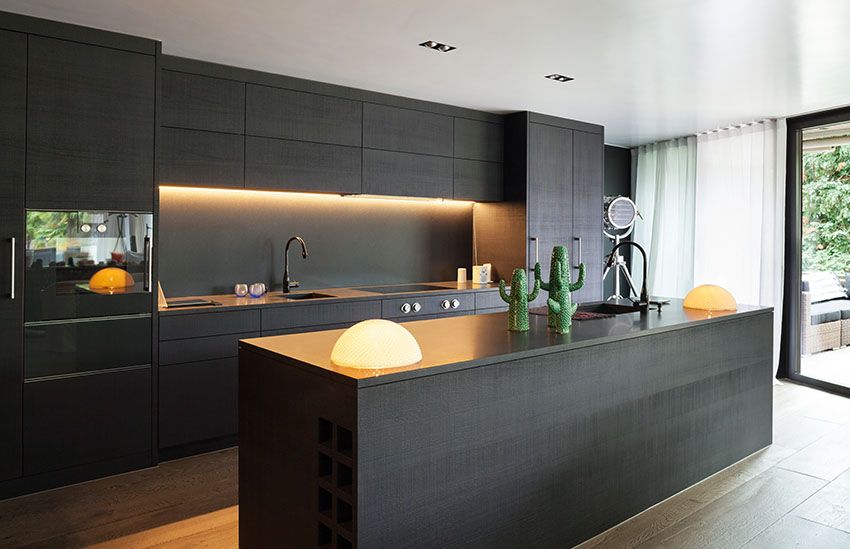
Matte black everything. Navy cabinets. Brass fixtures. Two-tone cabinets. These look stunning in 2026. In 2031, they’ll look dated. Kitchen renovations cost $40,000-$90,000 in Vancouver. You cannot afford to renovate every 5 years chasing trends.
What goes wrong: Homeowners commit permanent fixtures (cabinets, tile, countertops) in trendy colors/finishes.
Dunbar kitchen 2019: matte black cabinets, gold fixtures, bold geometric tile. Magazine-worthy. Listed 2024—every buyer said kitchen looked “too specific” or “would need updating.” Comparable homes sold $45,000-$65,000 higher with neutral kitchens. Owner took $52,000 hit because kitchen felt too trendy.
The fix: Cabinets in white, off-white, warm grays, natural wood (timeless). Want color? Paint island (cheaper to repaint than replace all cabinets). Countertops in simple white/gray/black quartz or granite. Simple subway tile backsplash. Brushed nickel or chrome fixtures. Trend in hardware—inexpensive to replace ($380-$650 for 30 pieces), swap every 5-7 years for fresh look.
Mistake #5: Skimping on Ventilation
Vancouver homeowners spend $6,500 on a professional-grade gas range, then install a $380 ductless range hood to “save money.” The hood recirculates air through a charcoal filter, doesn’t vent outside, and removes approximately 15% of cooking odors and zero moisture.
What goes wrong: Weak ventilation means your house smells like salmon for three days. Moisture from cooking damages cabinets (especially upper cabinets near the range). Grease accumulates on walls, ceiling, cabinets. Your home’s resale value drops because everything near the kitchen feels greasy.
A Grandview homeowner installed a 36-inch gas range with a 200 CFM ductless hood. After six months, the white upper cabinets above the range had a yellow tinge from grease accumulation. The kitchen smelled perpetually like cooking oil. She replaced the hood with a proper 600 CFM vented hood ($2,800 installed including ductwork through roof). Should’ve done it right initially.
The fix:
For gas ranges: Minimum 400 CFM vented hood (ducted to exterior), 600 CFM for ranges 36 inches or wider.
For electric/induction ranges: Minimum 300 CFM vented hood.
Ductwork: Must vent to exterior through roof or exterior wall. Ductless hoods (recirculating) are useless for grease/moisture removal—only acceptable for electric ranges in condos where exterior venting is prohibited.
Budget: Expect $1,800-$3,500 for hood + installation + ductwork if running new duct to exterior. Ductwork through roof requires roof penetration/flashing ($800-$1,200 extra). This isn’t optional if you want a functional kitchen.
Mistake #6: Forgetting Outlets and USB Ports
Modern kitchens use 8-12 small appliances regularly: coffee maker, toaster, blender, food processor, stand mixer, electric kettle, slow cooker, rice cooker, air fryer, Instant Pot. Each needs power. Homeowners design beautiful kitchens with 4 outlets total. Insufficient.
The fix: Outlets every 4 feet along backsplash (BC code). Minimum 2 dedicated outlets inside cabinets for appliances. Island: 1 outlet per 3 linear feet, minimum 2 total. USB ports: Install at least 2 outlets with integrated USB-A/USB-C near device areas ($45-$75 per outlet). Pop-up outlets in island for blenders/mixers ($180-$280 each).
Mistake #7: Insufficient Landing Zones
Landing zones are counter space next to appliances where you set things: groceries next to fridge, hot pans next to range, dirty dishes next to sink. Homeowners maximize cabinet storage, minimize counter space, then have nowhere to set hot pans or grocery bags.
The fix: Refrigerator 15″ landing zone on handle side. Range 15″ on each side. Sink 24″ on one side. Cooktop (if separate) 12″ on each side. Non-optional—without them, you’re setting hot pans on stove grates or balancing things precariously.
Mistake #8: Ordering Cabinets Too Late
Custom cabinets in Vancouver currently run 12-16 weeks lead time from order to delivery. Homeowners wait until permits approve (8-12 weeks), then order cabinets. Cabinets arrive week 20. Demo happens week 13. The kitchen sits gutted for 7 weeks with no cabinets, no counters, no function—just drywall and empty space.
The fix: Order cabinets during permit phase, not after permit approval. Finalize cabinet design early, get measurements precise, order cabinets while permits are processing. Cabinets arrive the same week permits approve, demo starts immediately, cabinets install week 2-3 instead of week 9-10.
Homeowners resist this because cabinets require 50% deposit at order ($8,000-$15,000 upfront). But the alternative is living without a kitchen for an extra 6-8 weeks. Worth the upfront payment.
Ready to avoid these expensive mistakes? Walker General Contractors designs kitchens around workflow first, aesthetics second. We map your actual cooking habits, inventory your storage needs, plan lighting for Vancouver’s dark winters, and order materials during permits so your timeline stays on track. Call 604-781-7785 or email info@walkergeneralcontractors.ca for a consultation where we’ll review your kitchen, identify potential mistakes before they happen, and design a kitchen that actually works for how you live—not just how it looks in photos.
About the Author: netsdev

Related Posts