Why Vancouver Homeowners Are Rethinking Open-Concept Kitchens: A Guide From Your Local Contractor
When Kyle and the team at Walker General Contractors started noticing a trend around 2019, it surprised them a bit. Homeowners across North Vancouver, from Deep Cove to Lynn Valley, were calling to ask about closing up their open-concept kitchens. After two decades of watching the design industry push open-plan living, contractors are now seeing something shift. The question isn’t whether you should have an open-concept kitchen anymore—it’s whether it actually works for your life.
We’re seeing this change happen across Vancouver, from the Westside near the University of British Columbia all the way to the North Shore. The cookie-cutter approach to kitchen design has given way to something more thoughtful. Let’s talk about what that means for your home, especially if you’re living in the Vancouver area.
The Appeal That Got Us Here: Why Open-Concept Made Sense
Let’s be honest—open-concept kitchens looked amazing in magazines. There was something beautiful about that flow, the light pouring through, families connected while cooking and living together. When you’re looking at homes around West Vancouver or Kitsilano, you’ll still see plenty of gorgeous open-plan designs that work perfectly.
The benefits were real and genuinely made sense for certain households. You could watch your kids while prepping dinner. Your dinner guests didn’t feel isolated while you cooked. That kitchen island became the hub of your home, and for a lot of families, that worked beautifully.
But here’s what Walker General Contractors has learned after years of renovations across Vancouver: the appeal is exactly where the problems start for others.
The Real Problems We’re Seeing in Vancouver Homes
Cooking Smells Travel Everywhere
This is the number one complaint we hear from homeowners on the North Shore and beyond. You cook salmon for dinner, and suddenly your living room, bedrooms, and guest rooms smell like fish. Open-concept homes mean your entire living space becomes your kitchen ventilation system. Even the best range hoods can’t contain everything. If you’ve got family members with asthma or respiratory sensitivity, this becomes more than just a preference—it becomes a quality-of-life issue.
Noise Is Amplified, Not Hidden
When you’re preparing a meal in Vancouver’s busy households, things get loud. The blender going, pots and pans clanging, the dishwasher running. In an open-concept layout, all of that noise bounces straight into your living area. If you’ve got someone working from home, kids trying to do homework, or you’re an early riser while your partner sleeps in, open-concept kitchens create real friction that a thoughtful closed kitchen would solve.
Heat and Cooling Efficiency Takes a Hit
Vancouver’s climate is mild, but winters still matter. Open-concept kitchens generate a lot of heat—cooking appliances run hot—and in an open layout, you’re trying to heat or cool a massive, connected space. Your HVAC system works harder. Your energy bills show it. A contained kitchen is simply more efficient to condition.
Visual Clutter and Mess Becomes Everyone’s Problem
Here’s something designers don’t always talk about: your kitchen is often a bit messy during the cooking process. Dirty pans, ingredients scattered across the counter, maybe some flour on the floor. In an open-concept kitchen, all of that is on display. Some families love the accountability. Others find it stressful. It’s worth thinking honestly about which category you fall into.
Entertaining Changes Everything
Sounds good in theory—cooking while guests hang around. In reality? When you’re actually preparing a three-course dinner while five people are standing around, the dynamic can feel cramped rather than connected.
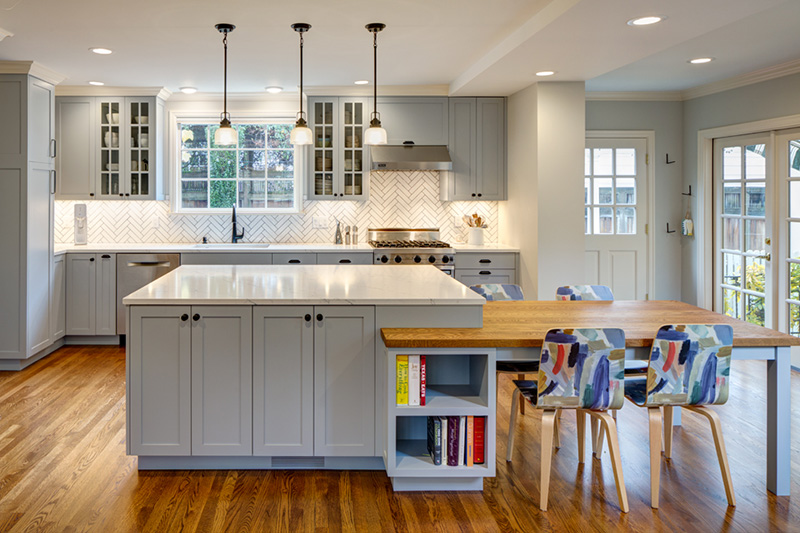
The Surprising Benefits We’re Seeing When We Close Things Up
Walker General Contractors has completed renovations that closed off kitchens across Vancouver—from renovations near the Capilano River in North Vancouver to projects in Squamish. Here’s what homeowners consistently tell us they love:
Getting Your Kitchen Back
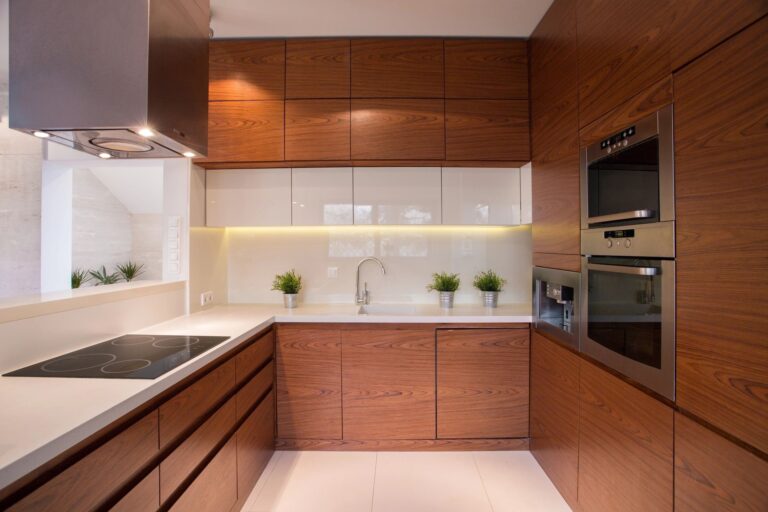
A contained kitchen feels like your own space again. You can let it be messy. You can work efficiently without worrying about presentation. Experienced cooks especially appreciate this—your kitchen becomes a functioning workspace rather than a performance space.
Actual Quiet
This affects more people than you’d expect. The ability to cook without broadcasting noise throughout your home is genuinely valuable. If anyone in your household is light-sensitive or noise-sensitive, a closed kitchen with a good door becomes priceless.
Better Odor Control
This one’s non-negotiable for some families. You make your breakfast without your bedroom smelling like butter and toast. You can smoke or slow-cook Indian food without having those smells linger in your furniture. It’s not just about fish—it’s about separating your cooking activities from your living space.
Actual Privacy
Sometimes you want to cook without an audience. Sometimes someone wants to tidy up a bit before guests arrive. Sometimes you want to have a conversation at normal volume. A kitchen with a door gives you that.
What About The Middle Ground?
Not everyone needs to go full open-concept or fully closed. Walker General Contractors works with homeowners to find what actually fits their real life.
The Pocket Door Solution
A large pocket door or sliding door lets you have openness when you want it and closure when you need it. This works especially well if you cook a lot but also love the light and connection when you’re not actively preparing meals. You get flexibility.
The Half Wall
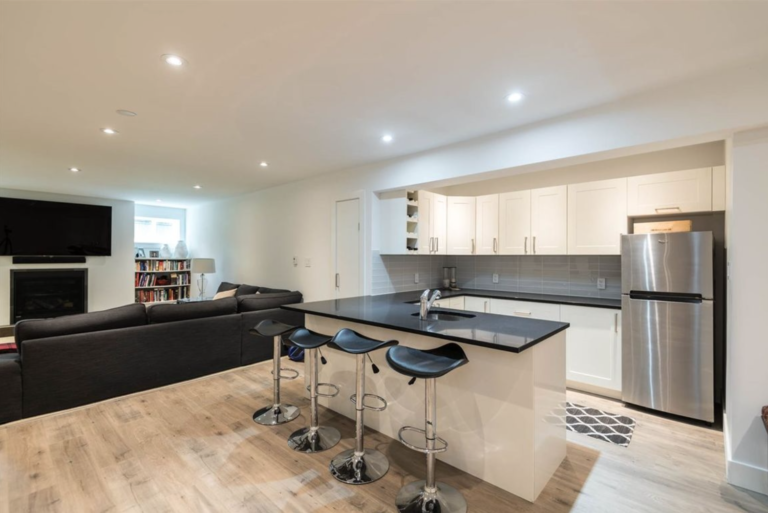
Some homes benefit from a partial wall or island that separates the kitchen from the main living space while keeping visual connection. This reduces odor and noise travel while maintaining some of that open feeling. It’s a genuine compromise that works in many Vancouver homes.
The Secondary Kitchen
For some households, keeping an older, closed kitchen or adding a prep kitchen while leaving a demonstration kitchen open makes real sense. If you do serious cooking at all, having a true work space where mess doesn’t matter changes everything.
Questions Homeowners Ask Us
“Won’t closing off my kitchen make it feel smaller?”Not necessarily. A well-designed closed kitchen with good lighting and thoughtful proportions can feel just as spacious. We’ve worked on renovations in North Vancouver where closing off the kitchen actually made the living room feel larger and more defined. You’re also not looking at it from the living room, which can sometimes make a space feel busier rather than bigger.
“Is it expensive to convert from open-concept?”It depends on what you’re doing. Adding a door, a pocket door, or a removable wall is relatively manageable. Adding a load-bearing wall costs more, but many homes have non-load-bearing walls between kitchen and living space. That’s where the real flexibility comes in. Start with a consultation—we’ve seen simple solutions that change everything at a reasonable price point.
“What if I decide I want it open again later?”This is where design thinking matters. If you use a pocket door or a removable partition, reversibility is built in. If you’re adding a permanent wall, you want to be sure. Many renovations we do include the option for future changes.
“Are closed kitchens out of style?”Only if you care what magazine editors think. Real life isn’t a magazine. If a closed kitchen serves your actual needs, it’s good design. Period.
“What do real estate agents say?”This is changing. Open-concept was supposedly the killer feature for resale value. We’re finding that homes with well-designed, flexible kitchens—whether open or closed—sell just fine. Buyers increasingly appreciate thoughtful design over trendy design.
What Walker General Contractors Recommends
Here’s what we tell people who are considering changes to their kitchen layout:
First, be honest about how you use your space. Spend a week paying attention to when you wish the kitchen was open and when you wish it was closed. That data is more valuable than any design trend.
Second, think about your kitchen work. Are you cooking elaborate meals regularly? Are you doing high-volume food prep? Do you bake? These active cooking lifestyles benefit from contained workspace. Are you mostly reheating and assembling? Open-concept might feel more connected without the downsides.
Third, talk to your family. What matters to the people actually living in your home? If someone’s working from home in the living room, their quiet matters. If your teenager has a friend over constantly, connection might matter more.
Finally, consider hybrid solutions. They’re more flexible and often less expensive than full renovations either direction.
Real Vancouver Kitchens for Real Vancouver Life
From the neighborhoods around Seymour Mountain to homes near the Capilano Suspension Bridge, the kitchens that work best are the ones that match how people actually live. There’s no universal answer. The family who runs a catering business out of their home probably needs a closed, dedicated kitchen. The retired couple who mostly makes coffee and salads together probably loves an open layout.
What matters is thinking through what you actually need rather than defaulting to what’s trendy.
Walker General Contractors has been working on Vancouver kitchens—from North Vancouver to the Westside—long enough to know that the best kitchen design is the one that serves your life, not the one that looks good on Instagram. If you’re thinking about changes to your kitchen layout, give us a call. We’ve done enough of these renovations to help you think through what actually makes sense for your home.
Walker General Contractors
Phone: 604.781.7785
Email: info@walkergeneralcontractors.ca
Location: 1330 Marine Dr #409, North Vancouver, BC V7P 1T4, Canada
Whether you’re closing up an open kitchen, opening up a closed one, or finding the solution in between, we’re here to help you build what actually works.
About the Author: netsdev

Related Posts